Ketamine or TMS? How I Help Patients Choose Between Them
If you've already cycled through two or three antidepressants and you're researching what comes next, ketamine and TMS are the two names you keep running into. Both have legitimate evidence. Both work when traditional medications haven't. And they're often presented as if they're rough equivalents: pick whichever fits your insurance.
They aren't equivalents. They work through completely different mechanisms, on completely different timelines, and they ask completely different things of you. Here's how I think about the choice with patients in evaluation visits.
Two different ways to push a brain out of a stuck pattern
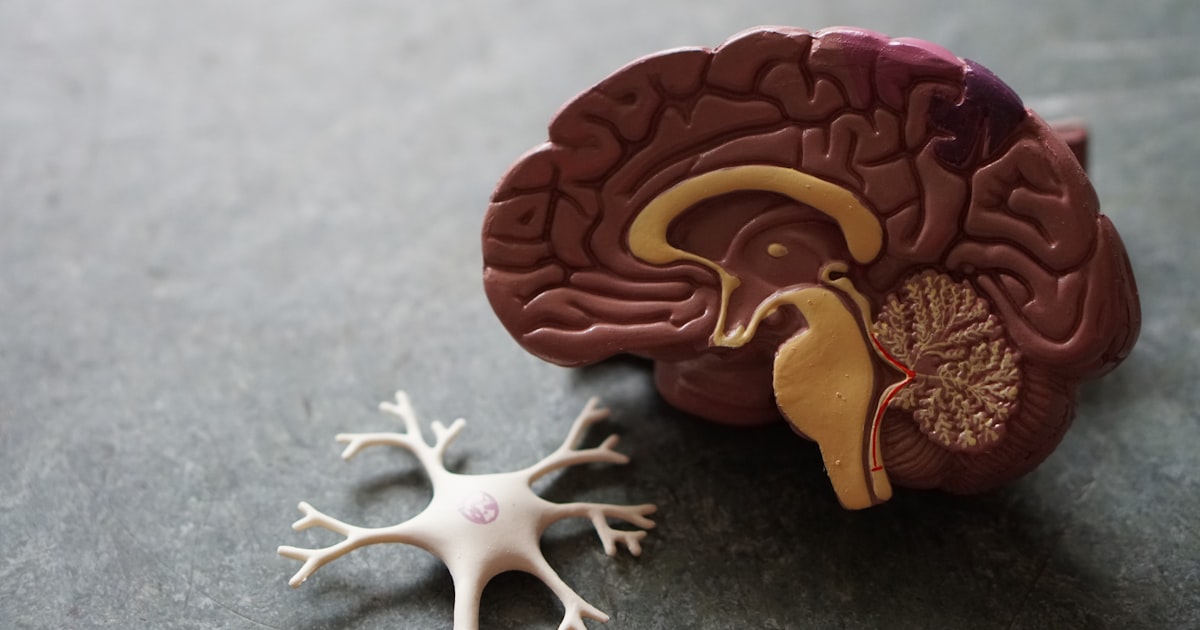
TMS works from the outside in. A magnetic coil sits against your scalp and delivers focused electromagnetic pulses to the left dorsolateral prefrontal cortex, a brain region that's reliably underactive in depression. The magnetic field induces small electrical currents in the brain tissue beneath, gradually strengthening the neural circuits that depression has weakened. Think of it as physical therapy for a specific brain region. Repeated stimulation builds capacity over time.
Ketamine works from the inside out. It blocks NMDA glutamate receptors, which kicks off a cascade: more glutamate release, AMPA receptor activation, BDNF production, and a window of accelerated synaptic plasticity that lasts days. The brain becomes briefly, unusually capable of forming new connections. Whatever you do during that window (therapy, sleep, sunlight, the people you love) gets disproportionate traction.
These aren't competing theories of depression. They're two genuinely different doors into the same problem. TMS rebuilds a circuit. Ketamine creates a window for the brain to rewire itself.
The timeline difference is bigger than people realize
This is the dimension that surprises patients most when I lay it out.
TMS asks you for 30 to 36 sessions over about six weeks: daily weekday appointments. Each session is about 20-40 minutes (some newer protocols are shorter). Most patients start noticing improvement in week two or three. Full effect typically lands by week four to six. The gains tend to be durable; many patients hold their improvement for six months to a year after a completed course before needing retreatment, if they need it at all.
Ketamine therapy is 10 or more sessions over 4-8 weeks, but the first improvement often shows up within hours to days of the very first session. It's not subtle when it happens. The trade-off is sustainability: ketamine's gains tend to require maintenance (typically a session every few weeks, tapering further over time) to hold. The lasting structural change happens, but it builds gradually with continued treatment rather than landing all at once.
If you're suffering acutely right now and need relief in days rather than weeks, ketamine has a meaningful advantage. If you can absorb six weeks of waiting for the effect to develop and you'd rather not be on ongoing maintenance, TMS's slower-but-more-durable profile may suit you better.
What the research actually says about effectiveness
Both treatments have strong evidence, but the studies are designed differently and the comparisons aren't apples to apples.
For TMS in treatment-resistant depression, real-world naturalistic data show roughly 50-60% of patients respond and about 35% reach full remission (Carpenter et al. 2012, Depression and Anxiety). FDA-cleared since 2008, with a substantial track record.
For ketamine in TRD: roughly 60-70% respond, 30-40% reach remission. The trials are smaller, less standardized, and ketamine is prescribed off-label rather than under formal FDA approval for depression.
The honest read: response rates are broadly comparable, with ketamine showing a slight edge in initial response and TMS showing better durability after a completed course. The patient who finishes either treatment is more likely to do well than the patient who starts the theoretically-better option and drops out halfway through. Which gets us to:
What each treatment asks of you, week to week
This is where most patients make their actual decision, and it's the part that matters most for predicting whether you'll finish.
TMS week: You'll be at a TMS practice's office Monday through Friday, every week, for about six weeks. Each visit is roughly an hour door-to-door including setup. You can drive yourself. You can return to work afterward. No support person needed, no activity restrictions. The session itself is just sitting in a chair with a coil against your head: clicking sounds, mild tapping sensation, no perceptual changes, fully alert. You leave and your day continues normally.
The cost: 20 round trips to a clinic in 4-6 weeks. For people whose work, geography, or caregiving situation can absorb that, it's manageable. For people who can't easily disappear to a clinic 20 times in a month, this is the thing that ends treatment.
Ketamine week: You'll have one or two sessions per week at home. Each session needs a sober adult sitter present, a quiet prepared room, and a 6-hour driving restriction afterward (most patients block the rest of the day). The dose itself runs 45-90 minutes of altered experience, with another hour to return to baseline. You don't travel anywhere. The structure is on you.
The cost: less time, but more demands on the time you do spend (preparation, presence of another adult, treating the day as recovery). Patients who treat at-home casually do worse. Patients who treat it with the same seriousness as a clinic visit do well.
Neither week is "easier." Ask yourself which one you'd actually follow through on.
The experience itself
This is the question patients are sometimes embarrassed to ask: What's it actually going to feel like?
TMS: you sit upright, the coil rests on your scalp, you hear regular clicking and feel a tapping rhythm against your head. Some patients find it mildly uncomfortable in the first few sessions; most habituate quickly. You're fully alert throughout. No perceptual changes, no dissociation, no altered state. You can read your phone if you want, though many patients close their eyes and rest. You walk out the same person who walked in.
Ketamine: you recline, dissolve the medication under your tongue, and over 15 minutes drift into an altered state. Most patients describe a floating sensation, sometimes visual imagery behind closed eyes, often emotional release, occasionally a sense of perspective shift on something you've been stuck on. You remain technically conscious but your usual sense of self is softened for an hour or so. You're not "out." You can speak if you need to. The altered window is the experience, and for many patients it's not just the side effect of the medicine; it's part of what makes the work happen.
Different people prefer different things. I've had patients who genuinely loved TMS's "nothing weird happens" predictability. I've had patients who found ketamine's altered state to be the most useful experience they've had in years. Neither preference is wrong. It's about what fits you.
Insurance and cost: the part that often decides
TMS has been FDA-cleared for treatment-resistant depression since 2008 and is covered by most major insurance plans, with prior authorization required to document failed antidepressant trials. With insurance, copays vary wildly; I've seen patients pay almost nothing and I've seen them pay several thousand dollars over a course. Without insurance, expect $6,000-$12,000 for a full TMS course.
At-home ketamine is almost never covered (off-label use). Cash cost is significantly lower; typically less than the out-of-pocket portion of an insurance-covered TMS course in my experience, though the gap varies. There are no facility fees because there's no facility, but there are ongoing maintenance session costs that TMS often doesn't have.
The honest math: if your insurance covers TMS at low copay AND a TMS center is convenient to you, TMS is the financially better path. If insurance doesn't cover it well, or you'd be paying close to the cash price either way, the at-home model usually comes out cheaper, and the convenience cost favors it too.
Run the actual numbers for your insurance and your nearest TMS center before deciding. The headline numbers can be misleading.
Can you do both?
Yes, and it's an increasingly sensible approach for the right patient. TMS strengthens specific neural circuits over weeks of stimulation; ketamine creates plasticity windows for rapid rewiring. The mechanisms are complementary rather than competitive.
I see two natural patterns. Some patients use ketamine first to get rapid relief from acute symptoms, then layer in TMS to build longer-term structural durability. Others complete a TMS course and use occasional ketamine sessions to maintain or extend the gains. We don't have large randomized trials of the combination yet, but clinical experience and the underlying biology both suggest it's a reasonable strategy when standalone treatment with either falls short.
If you're currently in TMS and not getting where you want to be, or if you've completed TMS and the gains are fading, ketamine is worth a conversation. The reverse is also true; if you've been on maintenance ketamine for a while and want to consolidate the gains, TMS may help.
What I'd ask you to consider
Before you decide, three honest questions:
What's your timeline? If you're acutely struggling and need relief in days, ketamine. If you can give it six weeks to develop, TMS becomes more viable.
What does your week actually have room for? If 20 clinic visits in a month is impossible, that's a real answer; the structure won't work no matter how much TMS appeals on paper. If at-home discipline (sitter, prepared space, day blocked) won't happen reliably, that's also a real answer.
What does your insurance actually cover, and what's near you? Find out. The financial side of this often makes the decision clearer than any clinical argument.
Ready to figure out which fits you?
If at-home ketamine seems like the right fit for your situation, here's the entry point. If TMS seems like a better match, find a reputable TMS practice near you and start the prior-authorization process; your psychiatrist or PCP can refer. Neither answer is wrong. The wrong answer is staying stuck because you couldn't decide.
- Eligibility check: tovanihealth.com/eligibility (5 minutes, FL, NJ, and CA residents)
- Phone: 561-468-6981
- What you get back: an honest answer about whether ketamine is the right starting point for your specific situation.
Benjamin Soffer, DO, Tovani Health
Related reading: treatment-resistant depression, after failing antidepressants, ketamine vs. Spravato, what if ketamine doesn't work.
Frequently Asked Questions
Which is more effective for depression, ketamine or TMS?
In treatment-resistant depression, ketamine typically shows higher response rates (60-70% in published trials) than TMS (roughly 50-60% in real-world naturalistic practice). Ketamine also works faster, with response often within days versus several weeks for TMS. That said, neither treatment works for everyone, and patients who fail one sometimes respond to the other. Effect duration is broadly comparable: a TMS course produces benefit for 6-12 months on average; a ketamine loading course produces 1-3 months of stable improvement before maintenance dosing.
How does the time commitment compare between ketamine and TMS?
TMS: about 30 to 36 daily clinic visits, 20-40 minutes each, over roughly 6 weeks. Total clinic time: roughly 20-30 hours, plus commute. Patients typically take about 6 weeks off significant scheduling commitments. Ketamine (at-home): 10+ sessions over 4-8 weeks, 90 minutes each at home, plus 5-10 minute video check-ins. Total time commitment: roughly 15-20 hours, no commute, schedulable around work and family. Ketamine wins decisively on time burden for most patients.
Is TMS or ketamine more likely to be covered by insurance?
TMS, clearly. TMS is FDA-approved for depression and covered by most major insurance plans (typically with prior authorization documenting failed antidepressant trials). Out-of-pocket costs vary from $0 with good coverage to several thousand dollars depending on plan. Racemic at-home ketamine is technically off-label and not insurance-covered (though it qualifies for HSA/FSA). Spravato (esketamine), the FDA-approved ketamine variant, is covered by some plans for TRD with prior authorization. Insurance coverage is one of the genuine reasons to consider TMS first.
Can I do ketamine and TMS together?
Yes, they don't pharmacologically interfere with each other, and there are case reports of combined protocols in particularly refractory depression. Sequential is more common than simultaneous: most patients try one, evaluate response, then add or switch to the other. If one produces partial response, adding the other can sometimes push partial responders into remission. The combined approach is more effort and cost than either alone, so it's typically reserved for patients who haven't gotten full remission from either treatment individually.
About the Author
Dr. Ben Soffer is a board-certified physician specializing in ketamine therapy for treatment-resistant depression and anxiety disorders. Based in Florida, New Jersey, and California, Dr. Soffer provides evidence-based, physician-led ketamine treatment through Tovani Health.