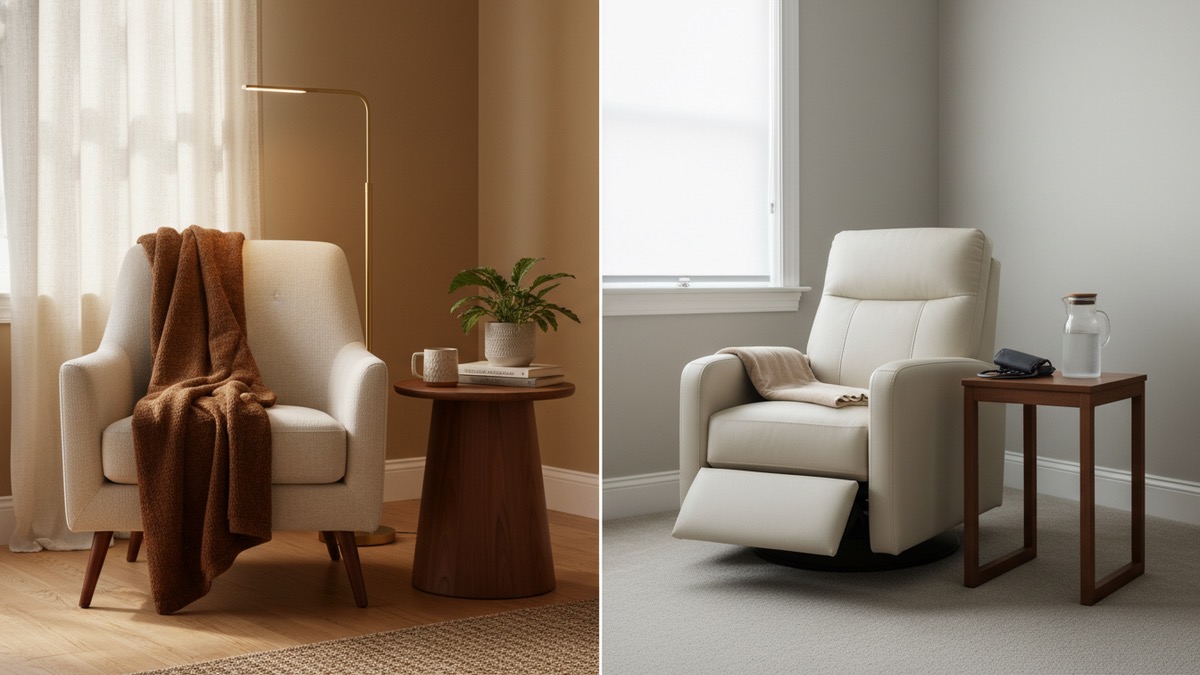
At-Home vs. Clinic Ketamine: How I Help Patients Choose
When patients ask me whether they should do ketamine at home or in a clinic, they usually want a clean answer, and the answer isn't clean. It's a real tradeoff, and the right call depends on details about you that no blog post can know. What I can do is walk you through how I think about it with patients in evaluation visits, so the questions you ask yourself afterward are the right ones.
I run an at-home program. That's a relevant disclosure. But it doesn't mean I think at-home is right for everyone; there are patients I send to clinics because that's the better fit for them. The choice is real, and the model that's wrong for you will fail you no matter how appealing it looks on paper.
The two models, briefly
Clinic ketamine is what most people picture when they hear "ketamine therapy": IV or intramuscular ketamine, administered in a medical office, by trained staff who watch you for the duration of the session and the recovery period. It's been the default model since clinics started opening in the mid-2010s, and it's how most of the early research was done.
At-home ketamine is sublingual or oral ketamine (a tablet or troche you dissolve under your tongue) that you take in your own house, with a sober adult sitter present, while a physician is reachable by phone. It's a newer model, made possible by COVID-era telemedicine rule changes that have largely persisted. The medication is the same molecule (or close to it; clinics often use a slightly higher-bioavailability formulation, but the active drug is the same).
Both work. Neither is medically superior. The differences that actually matter are practical.
What's genuinely different about safety
The clinic model has one safety advantage that's real and that I want to name plainly: if something goes wrong during your session, there's a healthcare professional in the room who can intervene in seconds. They have IV access, emergency medications, monitoring equipment, and the training to use them. EMS doesn't need to be called. The intervention is happening already.
In the at-home model, if something goes wrong, the response chain is longer: your sitter calls me, I assess, and if it's an emergency, EMS is summoned and they take 8-12 minutes to arrive. That's a real difference. And it's the reason at-home programs need to do much more careful screening before someone is approved.
The way an at-home program handles this trade is by lowering the prior probability of "something going wrong" to begin with. If you have well-controlled blood pressure, no significant cardiovascular history, no active psychosis, no contraindicated medications, and you're in the standard adult age range with normal BMI, your odds of needing in-room intervention during a sublingual ketamine session at therapeutic dose are very low. The published adverse-event data for sublingual ketamine in screened patients reflects this.
In a clinic, screening can be looser because the safety net is closer. At home, the screening is the safety net. So at-home programs say no to people clinic programs would say yes to. That's not a flaw; it's how the model works.
If you've been turned down for at-home and recommended a clinic, that's not a rejection. That's a clinician telling you the safety math is better the other way for your specific situation.
The dose and route differences are smaller than you'd think
You'll see a lot of comparison content emphasizing IV vs. sublingual as if they're fundamentally different treatments. They're not. Same molecule, different routes. The comparisons:
- IV has near-100% bioavailability, fast onset (minutes), short half-life. Precise dose control.
- Sublingual has lower bioavailability (around 25-30%), slightly slower onset (15-20 minutes), longer effective duration. Dose is calibrated higher to achieve comparable plasma levels.
- IM is somewhere in between IV and sublingual on bioavailability and onset.
Clinical response rates are broadly comparable across routes when dosing is appropriate. There's some research suggesting IV may produce slightly faster relief in the first 24 hours; at the four-week mark, response rates converge. If somebody tells you sublingual "doesn't work as well," they're either citing an outdated comparison or comparing inadequately-dosed sublingual to standard-dosed IV. The effectiveness comparison goes deeper into what the outcome data actually supports.
What route does affect: the experience. IV is faster onset and more intense. Sublingual is gentler and more gradual. Some patients prefer one feel over the other. That's a real preference and worth thinking about.
Cost is rarely close
Clinic-based IV ketamine in the US runs $400-$800 per session in most markets, with the standard initial course being six sessions over 2-3 weeks. Six-session series cost $2,400-$4,800 before any maintenance. Most clinics aren't covered by insurance; IV ketamine for depression is off-label, same as sublingual.
At-home sublingual ketamine, including the medication and the telemedicine supervision, typically runs a fraction of that. The exact figure varies by program, but my patients usually see all-in costs that are 50-70% lower than equivalent clinic courses. The full cost breakdown has the actual numbers and how to use FSA/HSA dollars to soften them further.
This isn't because at-home is corner-cutting. It's because the clinic model has unavoidable overhead (physical space, in-room staff time per session, cardiac monitoring equipment, IV supplies, medical waste handling) that the at-home model doesn't carry. The medication itself is generic and inexpensive in either case.
If cost is a binding constraint, at-home wins on a financial basis nearly every time. If cost isn't constraining, the financial side stops being the deciding factor.
What each model asks of your week
This is the dimension patients most often underestimate when planning, and it's frequently what determines whether they actually finish a treatment course.
Clinic week, during loading phase: Two sessions per week, each requiring a half-day commitment (travel + 1-2 hour session + 1-2 hours of monitoring + somebody driving you home + the rest of the day blocked because you can't drive). For two to three weeks. If you live an hour from the nearest clinic, double the travel cost. If you can't drive yourself home, double the human-hours per session.
At-home week, during loading phase: One to two sessions per week. Each session needs a sitter present in your house for the duration (typically 2-3 hours total), a quiet prepared room, and the rest of the day blocked off. No travel. The structure is on you and your sitter.
For people whose work, geography, or family situation can absorb half-day clinic visits twice a week, the clinic model is sustainable. For people who can't easily disappear from work or caregiving for that many hours, the at-home model is what makes treatment possible at all.
The catch in the other direction: at-home treatment requires you to bring discipline that the clinic model provides for you. If you can't reliably get a sitter, won't actually prepare a quiet space, or know yourself well enough to admit you'll cut corners, the structure of clinic visits will protect you in a way that at-home can't. I've had patients tell me, on reflection, that they need the external structure. That's a real and respectable answer.
Who I think is a clear at-home fit
Patients with well-controlled medical history, no significant cardiovascular concerns, a stable home environment, a reliable sitter, and a life that can absorb at-home discipline. Patients for whom the clinic logistics would be a barrier to ever starting. Patients who specifically respond better in their own environment (this matters more than people expect; being in your own room with your own things often produces better therapeutic experiences than a clinical office).
Who I think should go to a clinic
Patients with complex cardiovascular history. Patients who need same-room monitoring for medical reasons. Patients with severe ongoing suicidal ideation where the in-clinic safety net matters more than usual. Patients who, on honest reflection, won't do at-home discipline reliably. Patients who specifically prefer a clinical setting and feel safer there; that's a valid preference and it shouldn't be dismissed.
If you're in any of these groups and you contact us, I'll tell you so directly and try to point you at a reputable clinic in your area.
Hybrid approaches exist
A few patients do well starting in a clinic for the loading phase (where the in-room safety net matters most) and transitioning to at-home for maintenance (where the convenience and cost benefits compound over time). This isn't standard yet, but it's a sensible structure for the right person, particularly someone who needs the clinic's safety profile early on but can manage at-home well once they've established their dose response.
If you're considering this, mention it during your evaluation. Not every program is set up to do it, but some are.
The questions worth asking yourself
Before you decide, three honest ones:
What's your geography and schedule? Half-day clinic visits twice a week for three weeks is a real ask. If your life can absorb it, fine. If it can't, that's information.
What's your safety profile? If you've been told you have well-controlled hypertension or no significant cardiovascular history, your at-home risk math is favorable. If your medical situation is more complex, the clinic safety net is worth more.
What kind of structure works for you? Will you actually prepare the room, get the sitter, take the day seriously? Or do you need the external accountability of showing up at a clinic? There's no wrong answer; just be honest with yourself.
Curious whether at-home ketamine therapy is right for you?
Tovani Health is a physician-led at-home ketamine therapy practice serving Florida, New Jersey, and California. Our eligibility check walks through the screening that determines whether the at-home model is safe for you specifically. If it's not the right fit, you'll get a clear answer and, when I can, a pointer toward an alternative. Either result is a good outcome if it's the true one.
Questions before you submit? Call 561-468-6981 to speak with our team.
Benjamin Soffer, DO, Tovani Health
Related reading: is at-home as effective as a clinic?, Spravato vs. at-home ketamine, our at-home safety protocols, cost breakdown, what the treatment day looks like.
Frequently Asked Questions
Is at-home ketamine as effective as clinic-based IV treatment?
For most depression, anxiety, and PTSD indications, yes, comparable. Published outcomes data on sublingual ketamine in standard psychiatric protocols show response rates similar to IV infusion (60-70% in TRD). The mechanism is identical: NMDA-receptor antagonism plus downstream neuroplasticity. The bioavailability is lower (~25-30% vs ~100% for IV), but doses are calibrated to compensate. Clinical outcomes match across multiple comparison studies.
When is clinic-based IV ketamine actually a better fit?
Clear indications for IV: acute suicidality requiring hospital-level monitoring, severe untreated cardiovascular disease where blood-pressure response needs vigilant management, patients who haven't responded to oral routes after adequate trial, and certain chronic pain protocols where rapid plasma peaks matter clinically. Also: patients who lack a sober adult support person at home during sessions, or whose home environment isn't conducive to a private 90-minute session.
How does the at-home experience differ from a clinic visit?
At-home: you take a sublingual tablet in your bedroom or living room, lie down for 60-90 minutes with a sober adult present, video-check-in with the physician before and after the first few sessions. Clinic: you commute to a medical office, get an IV placed, sit in a recliner for 40-60 minutes with staff monitoring vitals continuously, recover in the office before being driven home. Most patients describe the home environment as more comfortable and conducive to therapeutic introspection; some prefer the structured supervision of a clinic.
Is at-home ketamine safe enough without on-site medical staff?
For appropriately screened patients, yes. The safety profile of sublingual ketamine at therapeutic doses is well-characterized; the same medication pediatric ERs use routinely. The eligibility screen filters out the conditions where in-clinic monitoring is genuinely necessary (uncontrolled hypertension, severe CV disease, active psychosis, severe SUD). For everyone else, the combination of lower-dose-route plus video-check-in plus a sober adult present produces a safety profile comparable to clinic care.
About the Author
Dr. Ben Soffer is a board-certified physician specializing in ketamine therapy for treatment-resistant depression and anxiety disorders. Based in Florida, New Jersey, and California, Dr. Soffer provides evidence-based, physician-led ketamine treatment through Tovani Health.